ASUS vs Msi: Gaming Laptops Compared by Specs
As an Amazon Associate we earn from qualifying purchases. Links on this page are affiliate links.
The ASUS vs msi gaming laptop debate often centers on architecture and display speed. You are comparing the ASUS Vivobook 16 with the MSI Cyborg 15. Both machines offer 16GB of RAM and 512GB of storage for solid multitasking. The main difference lies in their graphics and processors. The ASUS uses a Snapdragon X chip with integrated Adreno graphics, while the MSI features an Intel Core 5 processor paired with a dedicated RTX 5060 GPU. This choice defines your experience.
Key differences
| Aspect | ASUS Vivobook 16 Snapdragon Laptop | MSI Cyborg 15 15.6" RTX 5060 Laptop |
|---|---|---|
| Graphics Card | Qualcomm Adreno GPU | NVIDIA GeForce RTX 5060 |
| Processor | Qualcomm Snapdragon X | Intel Core 5-210H |
| Refresh Rate | 60Hz | 144Hz |
| Screen Size | 16 inches | 15.6 inches |
| Memory Type | 16GB | 16GB DDR5 |
Which one should you choose?
Choose ASUS Vivobook 16 Snapdragon Laptop if
- You prioritize a larger 16-inch WUXGA display for productivity.
- You seek maximum battery life from the efficient Snapdragon X architecture.
- You need a lighter device at 3.88 pounds for frequent travel.
Choose MSI Cyborg 15 15.6" RTX 5060 Laptop if
- You require dedicated RTX 5060 graphics for modern gaming.
- You want a smoother 144Hz refresh rate for fast-paced titles.
- You prefer Intel Core processing power with DDR5 memory speed.
Verdict: The MSI Cyborg 15 is the better choice for gamers who need dedicated graphics and a high-refresh-rate display. The ASUS Vivobook 16 suits users who value a larger screen, lighter weight, and longer battery life from its efficient ARM-based processor. Your decision depends on whether gaming performance or portability and screen real estate matter most to you.
ASUS vs MSI: Spec Comparison
Graphics card
The MSI Cyborg 15 features an NVIDIA GeForce RTX 5060 discrete graphics card. This component supports ray tracing and DLSS 4, which helps deliver sharper visuals and smoother gameplay in modern games. The ASUS Vivobook 16 relies on an integrated Qualcomm Adreno GPU. While this chip offers significant generational improvements in performance and power efficiency for everyday tasks, it lacks the raw graphical horsepower of a dedicated RTX card. For serious gaming, the MSI hardware provides a clear advantage in rendering complex scenes and maintaining high frame rates.
Refresh rate
Display smoothness is a key factor for gaming and fast-paced media. The MSI Cyborg 15 includes a 144Hz refresh rate panel. This higher frequency reduces motion blur and makes on-screen action appear much more fluid compared to standard displays. The ASUS Vivobook 16 is equipped with a 60Hz refresh rate display. While sufficient for general productivity and casual viewing, the 60Hz panel cannot match the responsiveness of the 144Hz screen. If you play competitive shooters or fast-action titles, the faster refresh rate on the MSI model will provide a noticeable benefit in visual clarity.
Processor
Both laptops use modern processors designed for efficiency and performance. The MSI Cyborg 15 utilizes an Intel Core 5-210H processor paired with 16GB of DDR5 memory. This setup is optimized for multitasking and AI-enhanced workflows. The ASUS Vivobook 16 runs on a Qualcomm Snapdragon X 8 Core SE chip. This ARM-based processor includes a Hexagon NPU capable of up to 45 TOPS for AI tasks and is designed for multi-day battery life. While the Intel chip offers traditional desktop-class performance, the Snapdragon excels in power efficiency and connectivity, making it ideal for all-day mobile use.
Screen size
Screen real estate affects how much content you can view at once. The ASUS Vivobook 16 features a 16-inch WUXGA display with a 16:10 aspect ratio. This larger canvas provides more vertical space for documents, spreadsheets, and web browsing. The MSI Cyborg 15 has a 15.6-inch FHD display with a standard 16:9 ratio. The 16-inch panel on the ASUS model offers a slightly larger viewing area, which can be beneficial for productivity tasks. However, the 15.6-inch screen on the MSI is still substantial enough for most gaming and entertainment needs.
Weight
Portability is important if you move your laptop frequently. The ASUS Vivobook 16 weighs 3.88 pounds. This makes it one of the lighter options in its class, easing the burden during travel. The MSI Cyborg 15 weighs 4.3 pounds. While still considered thin and light for a gaming laptop, it is noticeably heavier than the ASUS model. If you carry your device to class, work, or cafes daily, the lighter ASUS build is easier to transport. The weight difference may also impact comfort during extended handheld use or travel.
Which Gaming Laptop Suits Your Needs
Competitive gamers needing high frame rates
The MSI Cyborg 15 features a 144Hz refresh rate display, which provides smoother motion for fast-paced action titles. Its NVIDIA GeForce RTX 5060 graphics card supports ray tracing and DLSS 4 for enhanced visual fidelity. This discrete GPU delivers the raw power required for high-FPS gaming that integrated graphics cannot match.
Users prioritizing battery life and AI tasks
The ASUS Vivobook 16 uses a Qualcomm Snapdragon X processor with a Hexagon NPU capable of up to 45 TOPS. This architecture is designed for AI workflows and offers multi-day battery life. The integrated Adreno GPU optimizes power consumption, making it ideal for all-day productivity and creative tasks without frequent charging.
Those wanting a larger aspect ratio screen
The ASUS Vivobook 16 offers a 16-inch WUXGA display with a 16:10 aspect ratio. This provides more vertical screen space compared to the 15.6-inch 16:9 panel on the MSI Cyborg 15. The 1920 x 1200 resolution ensures crisp visuals, while the 300-nit brightness supports clear viewing in various lighting conditions for everyday use.
The products compared

ASUS Vivobook 16 Snapdragon Laptop
Best for: Productivity and AI tasks on a large screen
- Graphics Card
- Qualcomm Adreno GPU
- Processor
- Qualcomm Snapdragon X
- Memory
- 16GB
- Storage Capacity
- 512GB SSD
- Screen Size
- 16"
- Refresh Rate
- 60Hz
View on Amazon: ASUS Vivobook 16 Snapdragon Laptop Affiliate link
The ASUS Vivobook 16 is a laptop powered by a Qualcomm Snapdragon X processor and an Adreno GPU. It features a 16-inch WUXGA display with a 60Hz refresh rate. You get 16GB of RAM and a 512GB SSD for storage. This machine targets users who need all-day battery life and efficient AI performance. It is not designed for high-end gaming compared to dedicated graphics cards.
Pros
- Qualcomm Snapdragon X processor with Hexagon NPU
- 16GB RAM for smooth multitasking
- 16-inch 1920 x 1200 WUXGA display
- 512GB PCIe 4.0 SSD storage
Cons
- Integrated Adreno GPU limits gaming performance
- 60Hz refresh rate is lower than 144Hz
- 3.88 pounds weight is heavier for portability
Good fit if
- You need all-day battery life for work
- You prioritize AI processing efficiency
- You want a large 16-inch screen
Skip if
- You require high-refresh-rate gaming
- You need dedicated graphics power
- You want a lightweight ultrabook
Verdict: ASUS Vivobook 16 Snapdragon X suits users who value battery efficiency and AI tasks over raw gaming power. It fits those who prefer a larger 16-inch display for productivity.
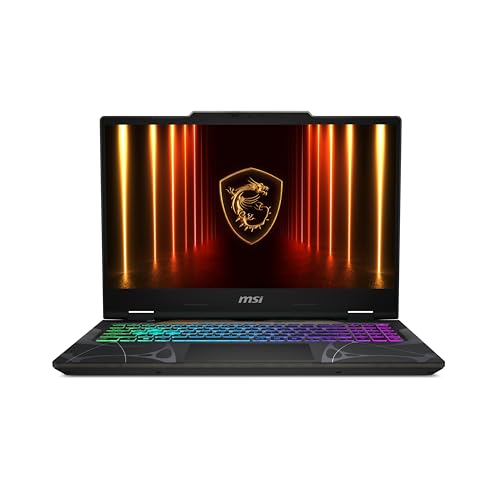
MSI Cyborg 15 15.6" RTX 5060 Laptop
Best for: portable gaming with RTX 5060 performance
- Graphics Card
- NVIDIA GeForce RTX 5060
- Processor
- Intel Core 5-210H
- Memory
- 16GB DDR5
- Storage Capacity
- 512GB SSD
- Screen Size
- 15.6”
- Refresh Rate
- 144Hz
View on Amazon: MSI Cyborg 15 15.6" RTX 5060 Laptop Affiliate link
The MSI Cyborg 15 is a thin gaming laptop featuring an Intel Core 5-210H processor and NVIDIA GeForce RTX 5060 graphics. It includes 16GB of DDR5 memory and a 512GB SSD. The 15.6-inch FHD display runs at 144Hz for smooth visuals. Weighing just 4.29 pounds, it offers mobility for students or casual gamers who need solid performance without heavy bulk.
Pros
- NVIDIA GeForce RTX 5060 graphics for ray tracing and DLSS 4 support
- 144Hz refresh rate on the 15.6-inch FHD display for fluid motion
- 16GB DDR5 memory supports multitasking and AI-enhanced workflows
- Lightweight design at 4.29 pounds for easy portability
Cons
- 512GB SSD storage is smaller than 1TB options available in variations
- 15.6-inch screen limits portability compared to 14-inch models
- Base model lacks the higher Core 7-240H processor option
Good fit if
- You want RTX 5060 performance in a lightweight chassis
- You need 144Hz visuals for competitive gaming
- You prioritize DDR5 speed for multitasking
Skip if
- You require a 1TB SSD for large game libraries
- You need the higher Core 7-240H processing power
- You prefer a 14-inch screen for maximum portability
Verdict: MSI Cyborg 15 RTX 5060 delivers efficient gaming performance in a portable form factor. It fits students or mobile gamers who value the RTX 5060 and 144Hz display over maximum storage or top-tier processing power.
Specifications side by side
| Spec | ASUS Vivobook 16 Snapdragon Laptop | MSI Cyborg 15 15.6" RTX 5060 Laptop |
|---|---|---|
| Graphics Card | Qualcomm Adreno GPU | NVIDIA GeForce RTX 5060 |
| Processor | Qualcomm Snapdragon X | Intel Core 5-210H |
| Memory | 16GB | 16GB DDR5 |
| Storage Capacity | 512GB SSD | 512GB SSD |
| Screen Size | 16" | 15.6” |
| Refresh Rate | 60Hz | 144Hz |
| Display Resolution | 1920 x 1200 WUXGA | FHD |
| Storage | 512GB SSD | 512GB SSD |
| Dimensions | 2.5 × 12 × 19 inches | 14.2 × 0.91 × 9.66 inches |
| Weight | 3.88 pounds | 4.29 pounds |
| Size | 2.50 | Core 5-210H |
| Color | Quiet Blue | Black |
| Model | X1607QA-DS54 | CYBORG15B2295 |
Frequently asked questions
Which laptop is better for pure gaming performance?
The MSI Cyborg 15 is the better choice for gaming. It includes an RTX 5060 graphics card, which supports ray tracing and DLSS 4 for improved visuals. The ASUS Vivobook 16 focuses on productivity and AI tasks rather than raw gaming power. If you need high frame rates, the MSI option is the clear winner.
How do the screen sizes compare between these two?
The ASUS Vivobook 16 features a larger 16-inch display. The MSI Cyborg 15 has a 15.6-inch screen. The ASUS model is designed for users who prefer a larger workspace for productivity and AI tasks. The MSI screen is paired with a 144Hz refresh rate for smoother motion in games.
Are both laptops lightweight and portable?
The MSI Cyborg 15 weighs 4.29 pounds and measures 9.66 inches in height. The ASUS Vivobook 16 is slightly lighter at 3.88 pounds. Both devices are designed for mobility. The MSI model is marketed as suitable for mobile gamers, while the ASUS fits users who value efficiency in a larger form factor.
Do both laptops have the same amount of RAM?
Yes, both laptops come with 16GB of RAM. This shared memory capacity supports solid multitasking for both productivity and gaming. The ASUS Vivobook 16 and the MSI Cyborg 15 both utilize this amount to handle modern applications and games efficiently without requiring an immediate upgrade for most users.
What is the difference in storage between the models?
Both laptops offer 512GB of SSD storage. This provides ample space for operating systems, games, and files. Neither model exceeds the other in storage capacity based on the available specifications. You can expect similar performance in loading times and data access for both the ASUS and MSI devices.
Which laptop is better for battery life and efficiency?
The ASUS Vivobook 16 Snapdragon X is suited for users who value battery efficiency. It relies on integrated graphics rather than a discrete card. The MSI Cyborg 15 uses an RTX 5060, which typically draws more power. If you prioritize longer unplugged usage over graphical intensity, the ASUS option is preferable.
Does the MSI laptop have a high refresh rate screen?
Yes, the MSI Cyborg 15 features a 144Hz display. This refresh rate helps deliver smoother motion for fast-paced action titles. The ASUS Vivobook 16 does not list a specific high refresh rate in its primary attributes. The 144Hz panel on the MSI model is a key feature for competitive gaming.