Apple MacBook Air 13.6-inch M5 vs Apple MacBook Pro 14.2-inch M5 (2026): Key Differences
As an Amazon Associate we earn from qualifying purchases. Links on this page are affiliate links.
When comparing the apple macbook air 13 inch vs macbook pro laptop, you see two machines built for Apple Intelligence. Both use the M5 chip and offer 1TB SSD storage. The main difference lies in the display and memory. The Air provides a standard Liquid Retina screen with 24GB of memory. The Pro features a brighter Liquid Retina XDR display but includes only 16GB of memory in this configuration. You must weigh screen quality against memory capacity.
Key differences
| Aspect | Apple MacBook Air 13.6-inch M5 | Apple MacBook Pro 14.2-inch M5 |
|---|---|---|
| Screen Size | 13.6-inch | 14.2-inch |
| Display Type | Liquid Retina | Liquid Retina XDR |
| Memory | 24GB Unified Memory | 16GB Unified Memory |
| Graphics Card | not listed | 10-core GPU |
| Thickness | 0.44 inches | 0.61 inches |
| Weight | 2.71 pounds | 3.42 pounds |
Which one should you choose?
Choose Apple MacBook Air 13.6-inch M5 if
- You prioritize a lighter, thinner laptop for carrying around campus or on the go.
- You need more unified memory for smoother multitasking with many apps open.
- You prefer a standard Liquid Retina display for everyday tasks and media consumption.
Choose Apple MacBook Pro 14.2-inch M5 if
- You require a brighter Liquid Retina XDR display with higher peak brightness for professional work.
- You want a larger 14.2-inch screen for better visibility and workspace.
- You are interested in a dedicated 10-core GPU for faster graphics processing.
Verdict: Choose the MacBook Air if you value portability and higher memory for general use. Select the MacBook Pro if you need the superior brightness and larger screen of the XDR display for creative work. Both models handle Apple Intelligence effectively.
MacBook Air vs Pro M5 Comparison
display quality
The MacBook Pro 14.2-inch M5 features a Liquid Retina XDR display with 1600 nits peak brightness and 1000 nits sustained brightness, plus a 1,000,000:1 contrast ratio. This setup is ideal for professional creative work in bright environments. The MacBook Air 13.6-inch M5 uses a standard Liquid Retina display supporting 1 billion colors. While it offers rich contrast and sharp detail for photos and videos, it lacks the extreme brightness and contrast specs of the Pro. If you need screen performance for HDR content or high-brightness visibility, the Pro has the clear advantage. For general media consumption, the Air display is sufficient.
memory capacity
Memory is a key differentiator between these two models. The MacBook Air 13.6-inch M5 comes equipped with 24GB of Unified Memory. This higher capacity helps with heavy multitasking and large AI workloads. The MacBook Pro 14.2-inch M5 in this configuration has 16GB of Unified Memory. While the Pro offers more powerful GPU cores, the Air provides more memory bandwidth for data-heavy tasks. If your workflow involves running many applications simultaneously or working with large datasets, the Air’s extra 8GB of memory is a practical benefit. The Pro’s lower memory count may limit extensive multitasking compared to the Air.
graphics performance
The MacBook Pro 14.2-inch M5 includes a 10-core GPU with a Neural Accelerator built into each core. This architecture delivers faster AI performance and handles demanding graphics workloads more efficiently. The MacBook Air 13.6-inch M5 also features a next-generation GPU with Neural Accelerators, but the specific core count is not listed in the provided data. Generally, the Pro’s dedicated 10-core setup suggests superior rendering and gaming capabilities. If you rely on GPU-intensive tasks like video editing or 3D modeling, the Pro’s defined graphics hardware offers a performance edge over the Air.
portability
Portability is a strong point for the MacBook Air. It weighs 2.71 pounds and measures 0.44 inches in thickness, making it highly portable for students and commuters. The MacBook Pro 14.2-inch M5 is heavier at 3.42 pounds and thicker at 0.61 inches. The Air’s smaller 13.6-inch screen also contributes to a more compact footprint. If you carry your laptop frequently or need a device that fits easily into a bag, the Air is the better choice. The Pro’s larger size and weight make it less convenient for constant travel, though it offers more screen real estate.
connectivity
Both laptops offer modern connectivity options, but the MacBook Air 13.6-inch M5 explicitly lists support for Wi-Fi 7 and Bluetooth 6 via the Apple N1 wireless chip. It also includes two Thunderbolt 4 ports, a MagSafe charging port, and a headphone jack. The MacBook Pro 14.2-inch M5 features advanced camera and audio systems but does not list specific wireless chip details or port counts in the provided data. Assuming standard Pro connectivity, the Air’s explicit mention of the latest Wi-Fi and Bluetooth standards gives it a slight edge for future-proof wireless performance and accessory compatibility.
Which MacBook M5 suits your needs
Students needing portability and long battery
The 13.6-inch MacBook Air weighs 2.71 pounds and measures 0.44 inches thick. It offers up to 18 hours of battery life. The 24GB of unified memory handles multitasking smoothly. This lightweight design fits easily into backpacks for daily campus use.
Creatives requiring high brightness and contrast
The 14.2-inch MacBook Pro features a Liquid Retina XDR display. It reaches 1600 nits peak brightness and 1000 nits sustained brightness. The 1,000,000:1 contrast ratio ensures deep blacks. This screen quality is essential for professional photo and video editing tasks.
Users wanting maximum memory capacity
This specific Air configuration includes 24GB of unified memory. The comparable Pro model listed here has 16GB. The higher memory count in the Air supports heavier multitasking and larger application workloads without slowing down your workflow.
Professionals needing advanced GPU performance
The Pro model features a 10-core GPU with Neural Accelerators. This hardware delivers faster AI performance and handles demanding creative workloads. The robust graphics processing power makes it suitable for complex rendering and intensive computational tasks.
The products compared
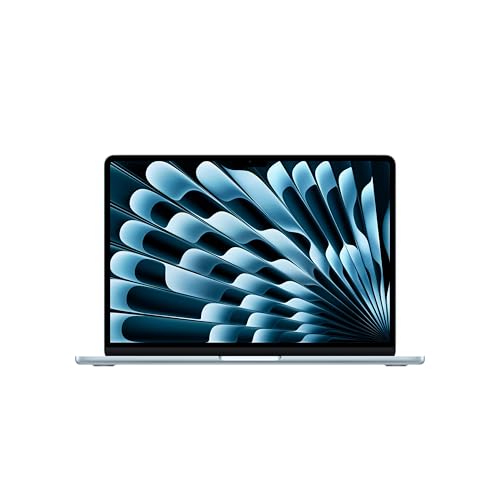
Apple MacBook Air 13.6-inch M5
Best for: portable students needing 24GB RAM
- Processor
- Apple M5
- Memory
- 24GB Unified Memory
- Storage Capacity
- 1TB SSD
- Screen Size
- 13.6-inch
- Dimensions
- 8.46 × 0.44 × 12 inches
- Weight
- 2.71 pounds
View on Amazon: Apple MacBook Air 13.6-inch M5 Affiliate link
The MacBook Air 13.6-inch with the M5 chip offers a compact 13.6-inch Liquid Retina display and 24GB of unified memory. This configuration pairs with a 1TB SSD for ample storage. It weighs 2.71 pounds and measures 0.44 inches thick. The device includes Wi-Fi 7 support and MagSafe charging. It suits students and mobile users who need strong AI performance in a lightweight chassis without the bulk of a Pro model.
Pros
- 24GB Unified Memory for smooth multitasking
- 1TB SSD storage capacity
- 13.6-inch Liquid Retina display
- 2.71 pounds portable weight
- MagSafe charging port included
Cons
- Only two Thunderbolt 4 ports limit connectivity
- 13.6-inch screen is smaller than Pro models
- No dedicated numeric keypad
Good fit if
- You need high RAM for creative apps
- You prioritize portability over screen size
- You want long battery life for classes
Skip if
- You require a larger 14-inch display
- You need more than two USB-C ports
- You want a dedicated numeric keypad
Verdict: MacBook Air 13.6-inch M5 24GB is ideal for students and mobile professionals who prioritize portability and strong unified memory over a larger screen. It delivers essential performance in a thin chassis.

Apple MacBook Pro 14.2-inch M5
Best for: Users needing high brightness and strong AI performance
- Graphics Card
- 10-core GPU
- Processor
- Apple M5
- Memory
- 16GB Unified Memory
- Storage Capacity
- 1TB SSD
- Screen Size
- 14.2-inch
- Dimensions
- 12.3 × 8.71 × 0.61 inches
View on Amazon: Apple MacBook Pro 14.2-inch M5 Affiliate link
This 14.2-inch laptop features the Apple M5 chip with a 10-core CPU and 10-core GPU. It includes 16GB of unified memory and a 1TB SSD. The Liquid Retina XDR display reaches 1600 nits peak brightness. It weighs 3.42 pounds and measures 0.61 inches thick. You get a 12MP camera and six speakers with Spatial Audio. This model suits users needing strong on-device AI performance and high brightness.
Pros
- 14.2-inch Liquid Retina XDR display with 1600 nits peak brightness
- Apple M5 chip with 10-core CPU and 10-core GPU
- 16GB unified memory and 1TB SSD storage
- Six speakers with Spatial Audio and Dolby Atmos support
- 12MP Center Stage camera with three studio-quality mics
Cons
- Heavier than the 13-inch MacBook Air at 3.42 pounds
- Thicker chassis at 0.61 inches compared to the Air
- Base model has only 16GB of unified memory
Good fit if
- You need a display with high peak brightness for bright environments
- You require more processing power than the 13-inch Air offers
- You want advanced audio features like Spatial Audio
Skip if
- You prioritize the lightest possible weight for travel
- You need a thinner profile for maximum portability
- You require more than 16GB of unified memory for heavy multitasking
Verdict: Apple MacBook Pro 14.2-inch M5 delivers higher brightness and processing power than the 13-inch Air. It fits users who need a brighter screen and stronger performance for creative workloads.
Specifications side by side
| Spec | Apple MacBook Air 13.6-inch M5 | Apple MacBook Pro 14.2-inch M5 |
|---|---|---|
| Graphics Card | not stated | 10-core GPU |
| Processor | Apple M5 | Apple M5 |
| Memory | 24GB Unified Memory | 16GB Unified Memory |
| Storage Capacity | 1TB SSD | 1TB SSD |
| Screen Size | 13.6-inch | 14.2-inch |
| Storage | 1TB SSD | 1TB SSD |
| Dimensions | 8.46 × 0.44 × 12 inches | 12.3 × 8.71 × 0.61 inches |
| Weight | 2.71 pounds | 3.42 pounds |
| Size | 24GB Unified Memory | 1TB SSD Storage | 16GB Memory | 1TB |
| Color | Sky Blue | Space Black |
| Model | MDHK4LL/A | MDE14LL/A |
Frequently asked questions
Is the MacBook Air 13-inch M5 lighter than the 14-inch Pro?
Yes, the Air is significantly lighter. It weighs 2.71 pounds and measures 0.44 inches thick. The MacBook Pro 14.2-inch M5 weighs 3.42 pounds and is 0.61 inches thick. The Air is better for users who prioritize portability and a thinner chassis for daily carrying.
Which laptop has more unified memory?
The MacBook Air 13.6-inch M5 has more memory. It includes 24GB of unified memory. The MacBook Pro 14.2-inch M5 comes with 16GB of memory. The Air is ideal for students and mobile professionals who need stronger multitasking capabilities in a portable device.
Do both laptops have the same storage capacity?
Yes, both models offer the same storage. Each device includes a 1TB SSD. This provides ample space for files and applications on either the Air or the Pro. You do not need to worry about storage differences when choosing between these two specific configurations.
Which model is better for bright environments?
The MacBook Pro 14.2-inch M5 is better for bright spaces. It features a display with 1600 nits peak brightness. The Air has a standard Liquid Retina display. If you work in well-lit areas or outdoors, the Pro offers higher brightness for clearer visibility.
What colors are available for these models?
The MacBook Air 13.6-inch M5 is shown in Sky Blue. The MacBook Pro 14.2-inch M5 is available in Space Black. These color options allow you to choose a device that matches your personal style preferences while maintaining the same core performance features.
Which laptop is better for creative workloads?
The MacBook Pro 14.2-inch M5 suits creative work better. It delivers higher brightness and stronger processing power. This makes it fit for users who need a brighter screen and enhanced performance for demanding tasks. The Air is more focused on portability and memory capacity.
How do the dimensions compare between the two?
The Air is more compact. It measures 12 inches by 8.46 inches. The Pro is slightly larger at 12.3 inches by 8.71 inches. The Pro is also thicker at 0.61 inches compared to the Air's 0.44 inches. The Air offers a thinner profile for easier transport.