Apple MacBook Air 13.6-inch M5 vs Apple MacBook Pro 14 M3 (2026): Key Differences
As an Amazon Associate we earn from qualifying purchases. Links on this page are affiliate links.
When comparing the apple macbook air 13 6 inch m5 vs macbook pro 14 m3, you are looking at two distinct Apple laptops. Both machines feature Liquid Retina displays and Apple Silicon processors for efficient performance. The main difference lies in their form factor and target use. The Air prioritizes portability with a lighter chassis, while the Pro offers a larger screen and dedicated graphics for more demanding tasks.
Key differences
| Aspect | Apple MacBook Air 13.6-inch M5 | Apple MacBook Pro 14 M3 Pro |
|---|---|---|
| Processor | Apple M5 | Apple M3 Pro 11-Core Chip |
| Memory | 24GB Unified Memory | 18GB Unified RAM |
| Graphics Card | Next-generation GPU with Neural Accelerators | 14-Core GPU |
| Screen Size | 13.6-inch | 14-inch |
| Storage Capacity | 1TB SSD | 512GB SSD |
| Weight | 2.71 pounds | 3.5 pounds |
Which one should you choose?
Choose Apple MacBook Air 13.6-inch M5 if
- You need a lighter laptop for carrying between classes or coffee shops.
- You want more unified memory for smoother multitasking in everyday apps.
- You prefer a larger storage capacity for your files and media.
Choose Apple MacBook Pro 14 M3 Pro if
- You require a dedicated multi-core GPU for video editing or 3D work.
- You need an SDXC slot for direct camera card access.
- You want a slightly larger 14-inch screen for better visibility.
Verdict: The MacBook Air M5 is the better choice for students and general users who value portability and all-day battery life. The MacBook Pro M3 Pro suits creative professionals who need extra GPU power and specific ports like SDXC. Your decision depends on whether you prioritize weight or specialized hardware capabilities.
MacBook Air M5 vs Pro M3 Key Specs
Processor performance
The MacBook Air M5 features the newer Apple M5 chip, which Apple describes as having a faster CPU and a next-generation GPU with Neural Accelerators. This design focuses on AI capabilities and fluid multitasking for everyday tasks. In contrast, the MacBook Pro 14 M3 Pro uses the Apple M3 Pro 11-Core Chip. While the M3 Pro is a powerful professional-grade processor, the M5 represents a more recent architectural generation. For users prioritizing the latest silicon technology and optimized AI processing, the Air M5 holds a technical advantage. The Pro relies on its 11-core CPU configuration, which remains robust but is an older generation compared to the Air's M5.
Memory capacity
Memory is a critical factor for multitasking and running complex applications. The MacBook Air M5 comes equipped with 24GB of Unified Memory. This higher capacity allows for smoother operation when switching between many browser tabs, creative software, and background processes. The MacBook Pro 14 M3 Pro is configured with 18GB of Unified RAM. While 18GB is sufficient for most professional workflows, the Air M5 provides 33% more memory in this specific comparison. If you frequently run memory-intensive applications or keep dozens of apps open simultaneously, the extra capacity in the Air M5 offers a clear practical benefit for long-term performance stability.
Graphics capability
For gaming and video editing, the GPU is essential. The MacBook Pro 14 M3 Pro includes a dedicated 14-Core GPU as part of its M3 Pro chip. This configuration is designed to handle heavy graphical workloads and professional rendering tasks efficiently. The MacBook Air M5 features a next-generation GPU with Neural Accelerators, but the specific core count is not listed in the provided specifications. Without explicit core counts for the Air's GPU, we cannot definitively state which offers superior raw graphical throughput. However, the Pro's specified 14-core setup is a strong, known quantity for creative pros. This round is a tie due to missing specific GPU core data for the Air.
Screen size and resolution
Display preferences vary based on your workspace needs. The MacBook Pro 14 M3 Pro features a 14-inch Liquid Retina XDR screen with a resolution of 3024 x 1964 pixels. This larger canvas provides more real estate for editing timelines and multiple windows. The MacBook Air M5 has a 13.6-inch Liquid Retina display that supports 1 billion colors. While the Air's screen is slightly smaller, it still offers sharp detail and vibrant contrast. The Pro's XDR panel also typically offers higher peak brightness and contrast ratios for HDR content. If you need more screen space for detailed work, the Pro 14-inch model is the better choice for productivity.
Storage capacity
Storage space determines how much data you can keep locally. The MacBook Air M5 in this comparison includes 1TB of SSD storage. This ample space is ideal for storing large video files, extensive photo libraries, and numerous applications without needing external drives. The MacBook Pro 14 M3 Pro is listed with 512GB of SSD storage. While 512GB is a standard baseline, it fills up faster than the Air's 1TB option. For users who do not want to manage cloud storage or external drives, the Air M5 provides double the internal capacity. This makes the Air a more practical choice for users who rely on local storage for their daily workflow.
Portability and weight
Portability is crucial for students and professionals who move between locations. The MacBook Air M5 weighs 2.71 pounds and measures 0.44 inches in thickness. It also features a slightly shorter height of 12 inches. The MacBook Pro 14 M3 Pro is heavier at 3.5 pounds and thicker at 0.61 inches. The Pro is also longer at 12.3 inches. The Air is significantly lighter and thinner, making it easier to carry in a backpack for long periods. If you travel frequently or sit in cramped spaces like airplanes, the Air M5 offers superior comfort and ease of transport compared to the bulkier Pro.
Connectivity options
Both laptops offer robust connection options, but they differ in specific ports. The MacBook Air M5 includes two Thunderbolt 4 ports, MagSafe charging, a headphone jack, and supports Wi-Fi 7 and Bluetooth 6. It also supports up to two external displays. The MacBook Pro 14 M3 Pro adds an SDXC card slot and an HDMI port, which are valuable for photographers and video editors who need direct media access and display output without adapters. The Air lacks these specific ports in the provided data. If you need to plug in an SD card or HDMI cable directly, the Pro is more versatile. Otherwise, the Air's modern Wi-Fi 7 support is a notable advantage.
Which laptop fits your workflow best
Students seeking portability and long battery life
The MacBook Air M5 weighs 2.71 pounds and measures 0.44 inches thick. It offers up to 18 hours of battery life. The 13.6-inch Liquid Retina display supports 1 billion colors. The M5 chip provides faster CPU speeds for multitasking. Wi-Fi 7 and Bluetooth 6 ensure modern connectivity. This lightweight design suits campus use and travel needs.
Creators needing high resolution and external ports
The MacBook Pro M3 features a 14-inch Liquid Retina XDR screen with 3024 by 1964 resolution. It includes an SDXC slot and HDMI port. The 14-core GPU handles graphics-intensive tasks. The M3 Pro chip delivers strong processing power. The 3.5-pound weight supports desktop replacement use. These ports reduce the need for dongles during creative work.
Users prioritizing maximum memory capacity for heavy apps
This configuration includes 24GB of unified memory. The larger memory pool allows smoother multitasking across many applications. It pairs with 1TB of SSD storage for ample file space. The M5 chip accelerates AI tasks and general performance. This setup handles demanding workloads without slowing down during complex projects.
The products compared
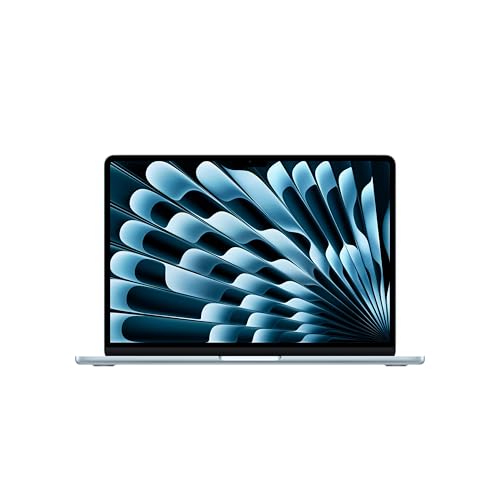
Apple MacBook Air 13.6-inch M5
Best for: Mobile students needing high RAM in a light chassis
- Processor
- Apple M5
- Memory
- 24GB Unified Memory
- Storage Capacity
- 1TB SSD
- Screen Size
- 13.6-inch
- Dimensions
- 8.46 × 0.44 × 12 inches
- Weight
- 2.71 pounds
View on Amazon: Apple MacBook Air 13.6-inch M5 Affiliate link
The Apple MacBook Air 13.6-inch M5 combines an Apple M5 processor with 24GB of unified memory and 1TB of SSD storage. This configuration supports heavy multitasking and AI workloads while maintaining a thin, portable design. It targets students and everyday users who need strong performance in a lightweight chassis. The 13.6-inch Liquid Retina display offers sharp visuals for media and work.
Pros
- Apple M5 chip with faster CPU and next-generation GPU
- 24GB Unified Memory for smooth multitasking
- 1TB SSD storage capacity
- Up to 18 hours of battery life
- Wi-Fi 7 and Bluetooth 6 connectivity
Cons
- 13.6-inch screen is smaller than the 14-inch Pro option
- Only two Thunderbolt 4 ports limit connectivity
- Lacks the higher refresh rate display found on Pro models
Good fit if
- You prioritize portability and long battery life over screen size
- You need 24GB of RAM for demanding creative apps
- You want the latest Wi-Fi 7 connectivity
Skip if
- You require a 14-inch or larger display
- You need more than two ports for peripherals
- You prefer the professional-grade display features of the Pro line
Verdict: Apple MacBook Air 13.6-inch M5 is a strong choice for students and mobile users who need 24GB of RAM and a compact form factor. It fits those who value battery life and portability over a larger screen or professional display specs.

Apple MacBook Pro 14 M3 Pro
Best for: Creative professionals needing strong performance
- Graphics Card
- 14-Core GPU
- Processor
- Apple M3 Pro 11-Core Chip
- Memory
- 18GB Unified RAM
- Storage Capacity
- 512GB SSD
- Screen Size
- 14"
- Display Resolution
- 3024 x 1964
View on Amazon: Apple MacBook Pro 14 M3 Pro Affiliate link
This 14-inch MacBook Pro features the Apple M3 Pro chip with an 11-core CPU and 14-core GPU. It includes 18GB of unified RAM and a 512GB SSD. The Liquid Retina XDR display offers high resolution. It connects via Wi-Fi 6E and Bluetooth 5.3. This model suits users needing strong performance in a portable form factor.
Pros
- Apple M3 Pro 11-Core Chip with 14-Core GPU
- 14-inch 3024 x 1964 Liquid Retina XDR Screen
- 18GB Unified RAM and 512GB SSD storage
- Wi-Fi 6E and Bluetooth 5.3 connectivity
- Includes SDXC slot and MagSafe 3 port
Cons
- Renewed condition rather than new
- 18GB RAM is less than the 36GB option
- 512GB SSD is smaller than the 1TB option
Good fit if
- You need a high-resolution XDR display for media work
- You require strong processing power for professional tasks
- You want a compact 14-inch portable laptop
Skip if
- You require a brand new device with full warranty
- You need more than 18GB of RAM for heavy multitasking
- You prefer a larger 16-inch screen size
Verdict: Apple 14" M3 Pro MacBook Pro delivers robust performance for creative professionals. It fits users who prioritize display quality and processing power in a portable chassis.
Specifications side by side
| Spec | Apple MacBook Air 13.6-inch M5 | Apple MacBook Pro 14 M3 Pro |
|---|---|---|
| Graphics Card | not stated | 14-Core GPU |
| Processor | Apple M5 | Apple M3 Pro 11-Core Chip |
| Memory | 24GB Unified Memory | 18GB Unified RAM |
| Storage Capacity | 1TB SSD | 512GB SSD |
| Screen Size | 13.6-inch | 14" |
| Display Resolution | not stated | 3024 x 1964 |
| Storage | 1TB SSD | 512GB SSD |
| Dimensions | 8.46 × 0.44 × 12 inches | 12.3 × 8.71 × 0.61 inches |
| Weight | 2.71 pounds | 3.5 pounds |
| Size | 24GB Unified Memory | 1TB SSD Storage | 18GB RAM, 512GB SSD |
| Color | Sky Blue | Silver |
| Model | MDHK4LL/A | MRX63LL/A |
Frequently asked questions
Does the MacBook Air M5 have more RAM than the MacBook Pro 14 M3?
Yes, the MacBook Air M5 includes 24GB of unified memory, while the MacBook Pro 14 M3 comes with 18GB of RAM. This extra memory in the Air model helps with heavy multitasking and running large applications smoothly. You get more headroom for future-proofing your workflow with the Air configuration.
Which laptop has a larger internal storage capacity?
The MacBook Air M5 features a 1TB SSD, which is double the storage found in the MacBook Pro 14 M3. The Pro model includes a 512GB SSD. If you store many videos, photos, or large projects locally, the Air provides significantly more space for your files without needing external drives.
Is the MacBook Pro 14 M3 heavier than the MacBook Air M5?
Yes, the MacBook Pro 14 M3 weighs 3.5 pounds, making it heavier than the MacBook Air M5. The Air model is lighter at 2.71 pounds. This weight difference matters if you carry your laptop in a bag all day. The Air is easier to transport for daily commutes or travel.
Which device is thinner and more portable?
The MacBook Air M5 is thinner at 0.44 inches compared to the MacBook Pro 14 M3, which is 0.61 inches thick. The Air also has a more compact footprint. This slim design makes the Air ideal for users who prioritize a lightweight chassis and minimal bulk in their daily carry setup.
Does the MacBook Air M5 offer more memory for demanding tasks?
The MacBook Air M5 offers 24GB of unified memory, which is beneficial for demanding tasks like video editing or running multiple virtual machines. The MacBook Pro 14 M3 has 18GB of RAM. The additional 6GB in the Air allows for better performance when handling large datasets or complex software workflows simultaneously.
What is the weight difference between the two laptops?
The MacBook Pro 14 M3 is 0.79 pounds heavier than the MacBook Air M5. The Pro weighs 3.5 pounds, while the Air weighs 2.71 pounds. This difference is noticeable when holding the device or carrying it in a backpack. The Air is the better choice for maximum portability.