64GB RAM vs 8GB RAM Gaming Laptops in 2026: Key Differences
As an Amazon Associate we earn from qualifying purchases. Links on this page are affiliate links.
This guide compares a 64GB RAM vs 8GB RAM gaming laptop setup. Product A is a high-performance machine with an AMD Ryzen 9 processor and RTX 5070 graphics. Product B is a basic Dell laptop with an Intel Core 3 processor. Both run Windows 11 and offer FHD displays. The main difference is memory capacity and processing power. You need to know if the extra RAM and CPU strength matter for your daily tasks.
Key differences
| Aspect | ASUS ROG Strix G16 RTX 5070 Ryzen 9 | Dell 15.6" Core 3 100U Laptop |
|---|---|---|
| Memory | 64GB DDR5 | 8 GB |
| Processor | AMD Ryzen 9 8940HX | Intel Core 3 100U |
| Graphics Card | NVIDIA GeForce RTX 5070 8GB GDDR7 | not listed |
| Storage Capacity | 2TB PCIe SSD | 512GB |
| Screen Size | 16" | 15.6" |
| Refresh Rate | 165Hz | not listed |
Which one should you choose?
Choose ASUS ROG Strix G16 RTX 5070 Ryzen 9 if
- You need to run heavy games or creative software without slowdowns
- You want to keep many apps open at once with 64GB RAM
- You prioritize fast graphics rendering with an RTX 5070 GPU
Choose Dell 15.6" Core 3 100U Laptop if
- You mainly browse the web and use office applications
- You prefer a lighter laptop that weighs 4.19 pounds
- You want a basic device with onsite service support
Verdict: Choose Product A if you require serious gaming performance or heavy multitasking capabilities. It offers significantly more memory and processing power. Choose Product B for simple daily tasks where high specifications are not necessary.
64GB vs 8GB RAM Laptop Comparison
Memory Capacity
Memory defines how much data your system can hold in active access. Product A features 64GB of DDR5 RAM, offering substantial bandwidth for heavy multitasking. This allows you to run multiple demanding applications simultaneously without slowdowns. Product B provides only 8GB of RAM. While sufficient for basic web browsing and office tasks, this limit restricts your ability to switch between many programs or run memory-intensive software. The difference is stark, with Product A providing eight times the active workspace for complex workloads.
Processor Power
The central processing unit handles general computing tasks. Product A uses an AMD Ryzen 9 8940HX processor, built for intensive performance and fast responsiveness. It is designed to handle demanding games and heavy workloads smoothly. Product B relies on an Intel Core 3 100U processor. This chip is energy-efficient and designed for everyday computing and finishing to-do lists quickly. For gaming or creative work, the Ryzen 9 offers significantly higher processing power compared to the entry-level Core 3.
Graphics Performance
Graphics cards render images and video. Product A includes an NVIDIA GeForce RTX 5070 with 8GB of GDDR7 memory. This advanced technology delivers lifelike lighting and enhanced detail for immersive gaming and creative work. Product B does not list a dedicated graphics card in its specifications. It likely relies on integrated graphics from the Intel Core 3 processor. For gaming, 3D rendering, or video editing, the dedicated RTX 5070 in Product A provides a massive advantage over the integrated solution in Product B.
Storage Space
Storage holds your files, applications, and media. Product A comes with a 2TB PCIe SSD, providing massive space for large libraries and fast data access. Product B offers 512GB of storage. While adequate for basic documents and a few programs, it fills up quickly with modern games and large media files. Product A gives you four times the storage capacity, ensuring you rarely need to manage space or use external drives for everyday gaming and file retention.
Portability
Physical size and weight affect how easy a laptop is to carry. Product B is much lighter at 4.19 pounds and thinner at 0.75 inches thick. It fits easily into bags for students or commuters. Product A is significantly heavier at 10 pounds and thicker, reflecting its powerful internal components and cooling needs. If you need a machine that travels easily every day, Product B is the clear choice for mobility, whereas Product A is designed for stationary high performance.
Which Gaming Laptop Fits Your Needs
Heavy multitaskers and gamers
You need 64GB of DDR5 RAM to run multiple demanding applications without slowdowns. The AMD Ryzen 9 8940HX processor handles intensive workloads smoothly. Combined with the RTX 5070 graphics and 2TB storage, this laptop delivers high performance for gaming and creative tasks.
Casual users on a budget
This Dell laptop offers 8GB of RAM and an Intel Core 3 processor for everyday computing. It is lightweight at 4.19 pounds and includes a 512GB SSD. The 15.6-inch FHD display and ComfortView software reduce eye strain, making it suitable for basic daily tasks.
Users needing extensive storage
Product A includes a massive 2TB PCIe SSD for storing files and multimedia. It also comes with a bonus docking station set and 32GB microSD card. The 64GB RAM ensures fast data access for large projects, while the 165Hz refresh rate provides clear visuals.
Quick picks
| # | Product | Best for | Price |
|---|---|---|---|
| 1 | ASUS ROG Strix G16 RTX 5070 Ryzen 9 | Heavy multitasking and high-end gaming | Check price of ASUS ROG Strix G16 RTX 5070 Ryzen 9 on Amazon |
| 2 | Dell 15.6" Core 3 100U Laptop | basic computing and light multitasking | Check price of Dell 15.6" Core 3 100U Laptop on Amazon |
The products compared
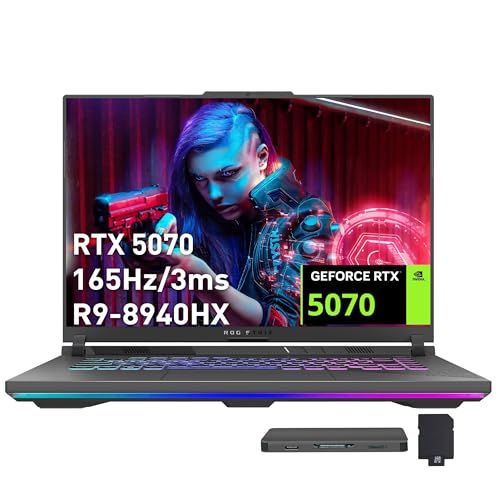
ASUS ROG Strix G16 RTX 5070 Ryzen 9
Best for: Heavy multitasking and high-end gaming
- Memory
- 64GB RAM (what this guide is about)
- Graphics Card
- NVIDIA GeForce RTX 5070 8GB GDDR7
- Processor
- AMD Ryzen 9 8940HX
- Storage Capacity
- 2TB PCIe SSD
- Screen Size
- 16"
- Refresh Rate
- 165Hz
View on Amazon: ASUS ROG Strix G16 RTX 5070 Ryzen 9 Affiliate link
This ASUS ROG Strix G16 gaming laptop pairs a 16-inch FHD+ 165Hz display with an AMD Ryzen 9 8940HX processor and NVIDIA GeForce RTX 5070 graphics. It features 64GB of DDR5 RAM and a 2TB PCIe SSD, allowing you to run multiple heavy applications simultaneously without slowdowns. This configuration suits users who need high memory capacity for intensive multitasking or creative workloads alongside gaming.
Pros
- 64GB DDR5 RAM for extensive multitasking
- AMD Ryzen 9 8940HX processor handles demanding workloads
- NVIDIA GeForce RTX 5070 8GB GDDR7 graphics for immersive gaming
- 165Hz refresh rate ensures fluid motion on the 16-inch display
Cons
- Heavier build at 10 pounds compared to lighter models
- FHD+ resolution is lower than 4K options for some users
- Warranty on upgraded RAM is limited to one year from the seller
Good fit if
- You need 64GB of RAM for heavy multitasking or professional workloads
- You want a high-refresh-rate display for fast-paced gaming
- You require large storage capacity for extensive game libraries or files
Skip if
- You prioritize portability and need a lighter laptop
- You prefer a 4K display for maximum visual clarity
- You are on a tight budget and need 8GB RAM
Verdict: ASUS ROG Strix G16 64GB RAM is a powerful machine for users who need substantial memory and processing power for gaming and creative tasks. It fits those who value high RAM capacity and fast refresh rates over ultra-portability.
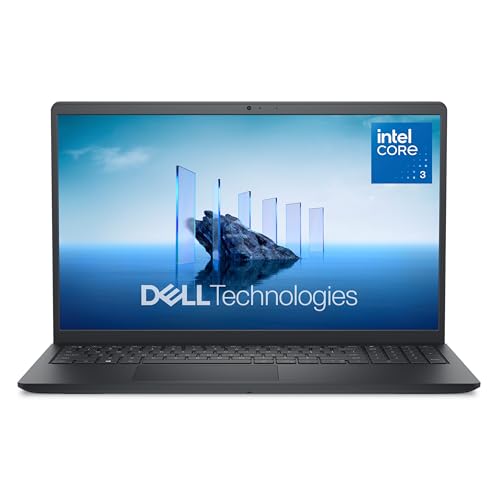
Dell 15.6" Core 3 100U Laptop
Best for: basic computing and light multitasking
- Memory
- 8GB RAM (what this guide is about)
- Graphics Card
- Intel UHD Graphics
- Processor
- Intel Core 3 100U
- Storage Capacity
- 512GB SSD
- Screen Size
- 15.6"
- Display Resolution
- FHD
View on Amazon: Dell 15.6" Core 3 100U Laptop Affiliate link
This Dell 15.6 laptop pairs an Intel Core 3 100U processor with 8 GB of RAM and a 512GB storage drive. It runs Windows 11 Home on an FHD display. The 8 GB memory limits multitasking and gaming compared to 64 GB systems. It suits light users who prioritize basic computing and battery efficiency over high performance.
Pros
- 8 GB RAM for everyday tasks
- Intel Core 3 100U processor
- 512GB storage capacity
- FHD display resolution
- 1 Year Onsite Service support
Cons
- Only 8 GB RAM limits heavy multitasking
- Intel Core 3 100U is entry-level
- No dedicated graphics card listed
Good fit if
- You need a laptop for basic web browsing
- You want a 15.6-inch screen for work
- You prefer 8 GB RAM for light use
Skip if
- You require 64 GB RAM for gaming
- You need high-end graphics processing
- You want to run demanding software
Verdict: Dell 15.6" 8GB RAM Laptop fits casual users who need reliable everyday performance. It does not suit gamers or power users requiring 64 GB RAM.
Specifications side by side
| Spec | ASUS ROG Strix G16 RTX 5070 Ryzen 9 | Dell 15.6" Core 3 100U Laptop |
|---|---|---|
| Graphics Card | NVIDIA GeForce RTX 5070 8GB GDDR7 | Intel UHD Graphics |
| Processor | AMD Ryzen 9 8940HX | Intel Core 3 100U |
| Memory | 64GB DDR5 | 8 GB RAM |
| Storage Capacity | 2TB PCIe SSD | 512GB SSD |
| Screen Size | 16" | 15.6" |
| Refresh Rate | 165Hz | not stated |
| Display Resolution | FHD+ | FHD |
| Storage | 2TB SSD | 512GB SSD |
| Size | 64GB | 2TB SSD | 512GB |
| Dimensions | 19 × 13.5 × 4.5 inches | 9.27 × 14.1 × 0.75 inches |
| Weight | 10 pounds | 4.19 pounds |
| Color | Gray | Carbon Black |
| Model | ASUS ROG Strix | LDC15250-3883BLK-PUS |
Frequently asked questions
Can 8GB RAM handle modern AAA gaming?
No, 8GB is generally insufficient for modern AAA titles. The Dell 15.6" model with 8GB RAM is designed for basic computing and light multitasking. It lacks the memory capacity to support high-end gaming workloads effectively. You will likely experience stuttering or low settings if you attempt to run demanding games on this configuration.
Is 64GB RAM overkill for just gaming?
For pure gaming, 64GB is often excessive but beneficial for heavy multitasking. The ASUS ROG Strix G16 with 64GB RAM supports substantial memory and processing power for creative tasks alongside gaming. If you stream, edit video, or run multiple apps simultaneously, this capacity ensures smooth performance without slowdowns during intensive sessions.
What is the main difference between these two laptops?
The primary difference lies in memory capacity and intended use. The ASUS model offers 64GB RAM, an RTX 5070 graphics card, and a Ryzen 9 processor for high-end performance. The Dell model provides 8GB RAM and an Intel Core 3 processor, targeting casual users. One is built for power, the other for everyday basics.
Does more RAM improve gaming frame rates?
More RAM prevents bottlenecks but does not directly increase frame rates. The ASUS laptop uses 64GB RAM to keep multiple applications running smoothly alongside games. The Dell laptop’s 8GB RAM limits active data access, which may cause lag in complex scenes. Frame rates depend more on your GPU, such as the RTX 5070 in the high-end model.
Which laptop is better for video editing?
The ASUS ROG Strix G16 is better for video editing due to its 64GB RAM and RTX 5070 graphics. This configuration handles intensive workloads and creative tasks efficiently. The Dell laptop with 8GB RAM is not suitable for video editing, as it lacks the necessary memory bandwidth and processing power for rendering large files smoothly.
Can I upgrade the RAM on the Dell laptop?
The provided data does not specify whether the Dell 15.6" laptop allows RAM upgrades. It lists 8GB RAM as a fixed attribute for basic computing. You should check the manufacturer's service manual for upgradability details. In contrast, the ASUS model comes with 64GB RAM pre-installed for immediate high-performance use without needing modifications.
Is the ASUS laptop portable for travel?
The ASUS ROG Strix G16 weighs 10 pounds and measures 19 inches in length. This size and weight make it less ideal for frequent travel compared to lighter ultrabooks. It is designed for users who prioritize high RAM capacity and fast refresh rates over ultra-portability. The Dell laptop is lighter at 4.19 pounds, offering better mobility.
What storage size comes with the 64GB model?
The ASUS ROG Strix G16 with 64GB RAM includes a 2TB SSD. This provides ample space for large game libraries and creative files. The Dell laptop with 8GB RAM features a 512GB storage size. Both offer solid-state drives for fast load times, but the 64GB model provides significantly more room for data.